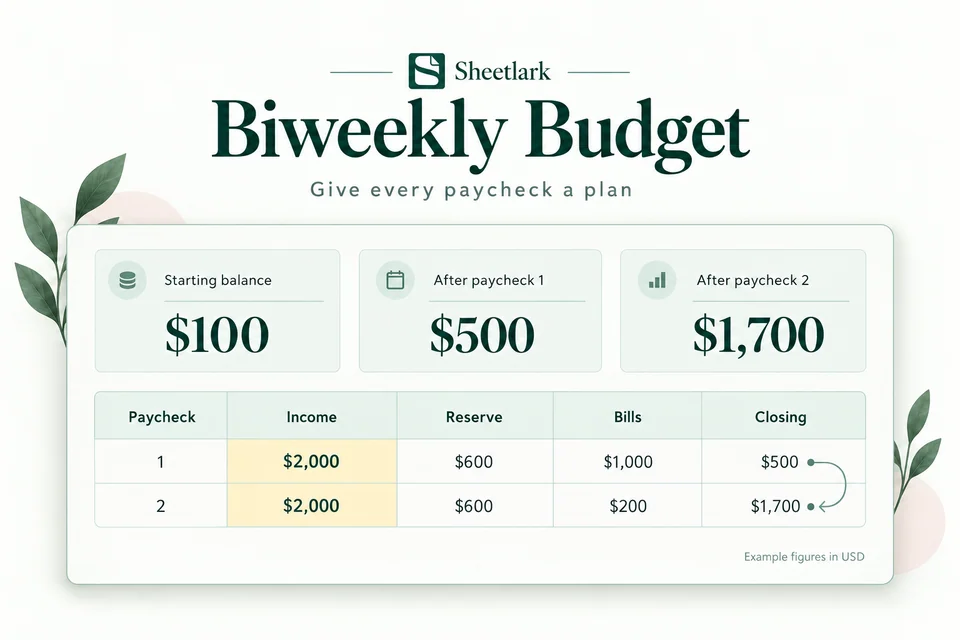
This example starts with $100 and a $2,000 paycheck. Set aside $600 for everyday spending and account for $1,000 in bills. The projected closing balance is $500.
| First pay period | Amount |
|---|
| Starting balance | $100 |
|---|
| Paycheck | $2,000 |
|---|
| Everyday spending reserve | −$600 |
|---|
| Bills | −$1,000 |
|---|
| Projected closing balance | $500 |
|---|
That $500 carries into the next period. With another $2,000 paycheck, a $600 reserve and $200 in bills, the next projected closing balance is $1,700.
You can also see how a smaller paycheck affects the plan. Changing the first paycheck to $1,000 produces a projected balance of −$500 for that period and $700 for the next, with the other inputs unchanged.
These are example amounts. The workbook estimates balances from the income, reserves and bills you enter; it does not connect to your bank or make payments.